
Catalog Software ⇒ Boost Your Online Sales and Traffic

Updated on: 21.07.2026
Digital catalog software has transformed the way online businesses present their products — turning static PDFs into interactive, shareable, and search-engine-friendly flipbooks that genuinely drive traffic and sales. In this guide, you'll discover how the right catalog software helps you feature more products, diversify your content, and reach customers across every digital channel.
Why Digital Catalog Software Changes the Game for Online Sellers
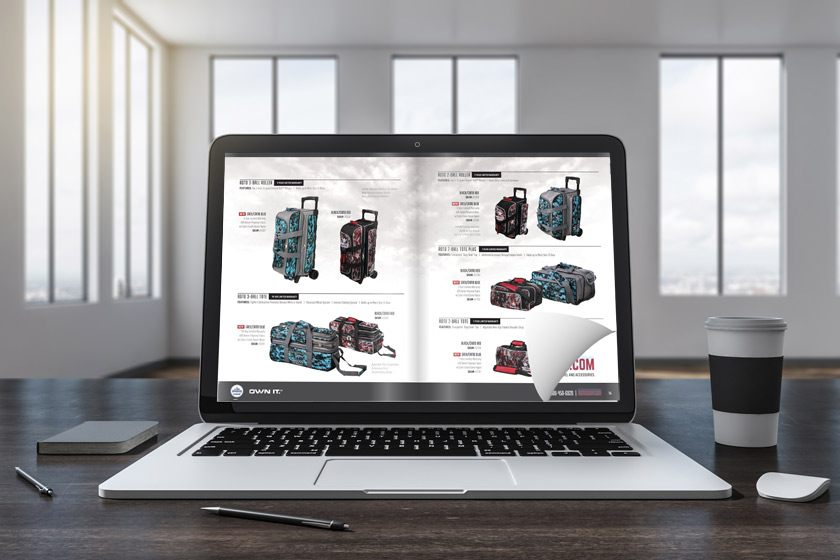
Anyone running an online shop knows the challenge: you have dozens, hundreds, or even thousands of products to showcase, but a standard website often buries less popular items where no one ever finds them. A digital catalog solves this by giving every product its own visible home — organized, browsable, and easy to share. The shift from print to digital doesn't mean losing the familiar feel of a classic catalog; modern catalog software replicates that page-turning experience in the browser, complete with realistic flip animations and a clean layout your customers already know how to navigate.
What makes this especially practical for e-commerce businesses is the cost equation. You create one digital catalog and distribute it to an unlimited audience — via email, social media, or embedded directly on your website. No printing costs, no postage, no physical distribution logistics. The budget you save can go straight back into improving your content and marketing campaigns.
Feature Every Product — Not Just the Popular Ones
One of the biggest pain points for online retailers is product visibility. Items that aren't on the front page of your shop rarely get seen, and low traffic means low search engine rankings — a frustrating cycle. A digital catalog breaks that cycle by giving you unlimited pages to feature your full inventory, organized into clear categories so customers can actually find what they're looking for.
By adding direct links from each catalog page back to the corresponding product page on your website, you create a seamless sales path. A customer browsing your digital catalog clicks a product they like and lands directly on the purchase page. This kind of structured internal traffic also signals relevance to search engines, which can improve rankings for products that previously had almost no organic visibility. For a deeper look at how flipbooks can support your broader digital marketing approach, How to Improve Your Digital Marketing Strategy with Flipbooks is worth a read.
Diversify Your Content to Keep Customers Engaged
A static list of product images and prices only goes so far. The real power of a digital product catalog lies in the multimedia content you can layer into it: high-resolution images, embedded videos, audio clips, and clickable links all work together to build an engaging experience that keeps readers on the page longer. Think of it as a sales path you design — one that educates, entertains, and guides your audience toward a purchase decision.
This content-first approach also feeds your wider online sales strategy. A well-produced digital catalog gives you something genuinely shareable on social media, a valuable embed for your blog or website homepage, and a compelling attachment for your email newsletter. Each channel you activate multiplies the reach of a single catalog without any additional production cost.
Platforms like ad-free digital catalog publishing with YUMPU let you present your catalog without third-party ads distracting your readers — keeping the focus entirely on your products and brand. Once your catalog is published, you can also share it instantly across social networks, embed it on your site for a better user experience, and even include it in your email footer so every outgoing message works as a soft product touchpoint.
If you're ready to put this into practice, you can start publishing for free on YUMPU and see how quickly a PDF becomes a fully interactive digital catalog.
How to Get Started with Free Catalog Software
If you haven't tried digital catalog software yet, the most practical first step is to test it with a free version. Take an existing product PDF — even a simple one — and convert it into a flipping catalog. The hands-on experience will quickly show you what's possible in terms of layout, interactivity, and distribution.
Once you've seen the basics, you can explore more advanced features: analytics to track which pages get the most views, customizable branding, and SEO-friendly publishing that makes your catalog discoverable in search results. Choosing the right catalog maker software for your business depends on the size of your inventory, how often you update your catalog, and which channels matter most to your audience — but the barrier to entry has never been lower.
The key takeaway is this: digital catalogs are not just a substitute for print. When used strategically, they become an active part of your online sales engine — attracting new visitors, re-engaging existing customers, and improving your search visibility across the board.
FAQ: Digital Catalog Software for Online Businesses
What is digital catalog software?
Digital catalog software is a tool that converts PDF documents into interactive, page-turning online catalogs — also called flipbooks. These digital catalogs can be shared via email, embedded on websites, or distributed through social media.
How does catalog software help boost online sales?
By making your full product range browsable and visually engaging, digital catalogs guide customers from product discovery to your website's purchase pages. The structured traffic they generate can also improve search engine rankings for individual product pages.
Is free catalog software good enough for a professional result?
Many free versions of catalog software offer solid core features, including page-flip animations, basic embedding, and sharing options. For advanced needs like ad-free presentation, analytics, or custom branding, a paid plan is typically worthwhile.
Can I embed a digital catalog on my website?
Yes — most catalog software platforms provide an embed code you can paste directly into any webpage or blog post. This keeps visitors on your site longer and gives your catalog maximum visibility.
How is a digital catalog different from a regular PDF?
A standard PDF is a static file that readers scroll through. A digital catalog created with flipbook software mimics the experience of a physical catalog with realistic page-turning, clickable links, and multimedia content — making it far more engaging.
Can digital catalogs improve my Google ranking?
Yes, in two ways: traffic from your catalog to product pages signals relevance to search engines, and a well-optimized published catalog can itself appear in search results, extending your organic reach.
How often should I update my digital product catalog?
Whenever your inventory, pricing, or promotions change. One major advantage of digital catalogs over print is that updates can be made instantly — your audience always gets the most current version without any reprint costs.
Can I share a digital catalog on social media?
Absolutely. Most digital catalog platforms generate a shareable link that works across all major social networks. Some platforms also support direct publishing integrations for even faster distribution.
Does digital catalog software work for small businesses?
Yes — in fact, small businesses often benefit most, since the cost savings versus print are significant even at low volumes. A single well-made digital catalog can serve as both a marketing asset and a product reference for customers.
What file format do I need to create a digital catalog?
Most catalog software tools accept a PDF as the starting file. You design your catalog in any layout application — or even a word processor — export it as a PDF, and upload it to the platform to generate the interactive flipbook version.
Submit a Comment
Your email address will not be published. Required fields are marked *
Your comment was sent successfully.
Your comment could not be sent.
About me

Hi everybody,
my name is Jason, I’m a part-time chef and full-time digital marketing guru, I know pay-per-click advertising like the back of my hand. I’m also passionate about skateboarding.